NDIR CO2 Sensors
NDIR (non-dispersive infrared) CO2 sensors enable the accurate concentration measurement of CO2. They are used across a wide range of applications including medical equipment and life sciences, industrial process control, agriculture, food storage, transportation and aerospace, and for smart building/air quality IoT systems.
The development of CO2 sensing technology has evolved significantly since its inception. The first NDIR gas sensors were patented in 1938 and were used to monitor industrial processes in WWII before its commercialization in the 1960s. These early devices were both large and very power-hungry, limiting their applications to laboratory and industrial environments.
Recent advances in NDIR sensing technology, including LED technologies but also signal processing, and miniaturization have enabled these systems to be used in a much wider range of systems – including the development of highly compact, ultra-low-power CO2 sensors suitable for battery-powered and wireless IoT devices.

History of NDIR CO2 sensing
1938:
The NDIR CO2 sensing method was first patented in 1938 by Karl Friedrich Luft and Erwin Lehrer. This device, called the URAS or Ultrarot-Absorptionsschreiber, used a heated incandescent filament as an IR source, with its light sent into a sample cell, to a detector for measuring gas concentrations. For decades, this basic design dominated industrial and laboratory applications, with the method suitable for all gases that absorb IR light.
1950s-1970s:
After WWII, companies like Beckman Instruments brought NDIR technology to the wider market – the first being the Beckman LB-1, which used a DC-operated infrared source with a mechanical chopper to create light pulses. These sensors were reliable but remained large, power-hungry, and expensive. As such, their use was limited to high-value applications such as medical capnography and scientific research.
1961:
The development of solid-state infrared LEDs by Biard and Pittman enabled the replacement of hot-filament incandescent bulbs with more energy-efficient LEDs to dramatically reduce power consumption. Switching to LEDs also eliminated the need for mechanical choppers, and significantly increased sensor lifespan.
Following this, the first reported mid-infrared LED was developed in 1966 by Melngailis and Rediker – using zinc diffusion into an InAs diode to achieve a 3.7 µm wavelength light.
Further research for mid-IR LEDs also focused on InAsSbP, InGaAs, InGaAsSb and InAsSb.
1990s:
While the invention of LEDs made NDIR sensing more practical for a broader range of uses, their use was not possible for CO2 sensing until the 1990s when the first LEDs capable of efficiently producing the 4.26 µm mid-infrared wavelength required for CO2 detection.
These were still, however, large and relatively power-hungry.
2000s to today:
Advances in miniaturization and power consumption have continued. This has been particularly driven by advanced MEMS (micro-electromechanical systems) technology, with modern NDIR sensors integrating the IR source, optical path, and detector into a tiny, robust package.
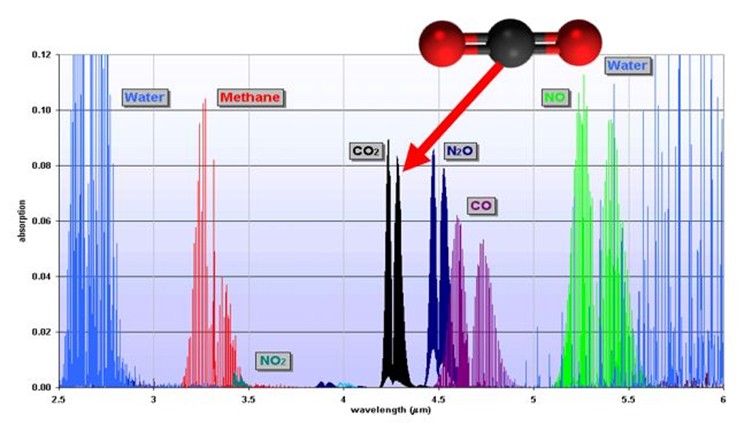
Figure 2: The absorption spectrum of gases across the mid-IR light wavelengths
Beer-Lambert’s law for NDIR CO2 concentration monitoring
CO2 absorbs light at 4.26 µm and NDIR CO2 sensors operate by detecting the absorption of this wavelength of infrared light.
Modern NDIR CO2 sensors still work in a similar method to the URAS design, with an infrared light source (LED) emitting radiation through a gas sample chamber and onto a detector (a photodiode), and the amount of light absorbed at the 4.26 µm wavelength is proportional to the concentration of CO2. It can therefore be calculated using the Beer–Lambert law.
I=I0e−kCL
Figure 3: Beer-Lambert’s law with I being transmitted light intensity, I0 the incident light intensity, k the absorption coefficient, C the gas concentration and L the optical path length
For this, the optical path length within the sensor affects sensitivity and size, with shorter paths enabling smaller sensors but requiring sensitive detectors and stable light sources to maintain accuracy.
CO2 Sensor Types
NDIR CO2 sensors are available in a wide variety of types, each tailored for specific uses. They are primarily distinguished by their gas sampling method, measurement range, physical format, and adherence to industry standards.
Sample Methods
Gas can enter the sensing chamber either via diffusion or by active flow-through sampling. Diffusion-based sensors offer simpler, low-power designs but have slower response times, while flow-through sensors provide faster readings at the cost of increased power consumption. Alternative sensing methods, such as electrochemical and solid-state sensors, exist but typically do not match the accuracy or longevity of NDIR CO2 sensors.

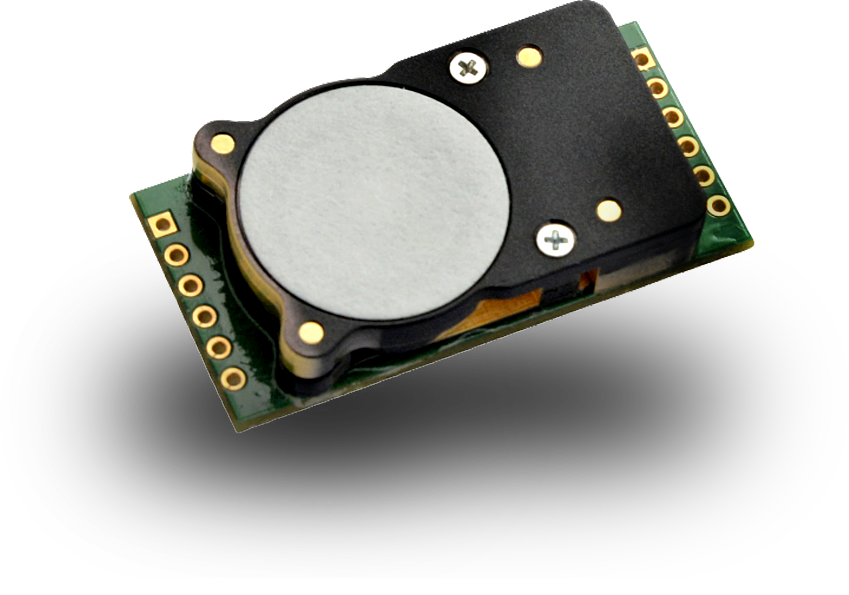
Figure 4: The explorIR uses a diffusion sampling method and combines this with wide-range sensing to allow measurement up to 100% concentrations in fast-changing environments
Measurement Ranges
CO2 sensors are available with different measurement ranges tailored to their intended applications, with low-, medium- and high-range sensors available.
Low-range sensors are common in indoor air quality (IAQ) monitoring, medical incubators, and HVAC systems and have been created to measure from c.400 ppm and to 5% (5,000 ppm).
Medium-range sensors are able to measure CO2 concentrations up to 20% and are typically used in applications such as industrial safety and fermentation control.
High-range sensors, which are capable of measuring 0 and 100% CO2, will typically be intended for use in process monitoring and scientific research.
Format and interface
In addition to measurement range, the physical format and interface options vary. Portable sensors and handheld meters are often compact and battery-operated, while fixed installations may include duct or wall-mounted sensors with wired digital interfaces such as UART or I2C. Wireless integration for IoT applications is increasingly common, requiring UART CO2 sensor modules or I2C-based sensors that support low power modes and reliable data communication.
Standards and Compliance
Sensors intended for regulated environments must comply with relevant standards. Medical respiratory gas monitors are subject to ISO 80601-2-55, while building ventilation sensors may reference ASHRAE 62.1.
Workplace safety sensors often require certification to EN 45544. Adherence to electromagnetic compatibility (EMC) and environmental directives ensures the sensor’s suitability for a wide range of markets.
CO2 performance characteristics and sensor features
Accuracy
Engineers must consider several parameters when selecting a CO2 sensor. Accuracy is usually specified as an absolute error in parts per million plus a percentage of the reading, for example the explorIR-M has an accuracy of ±70 ppm + 5%.

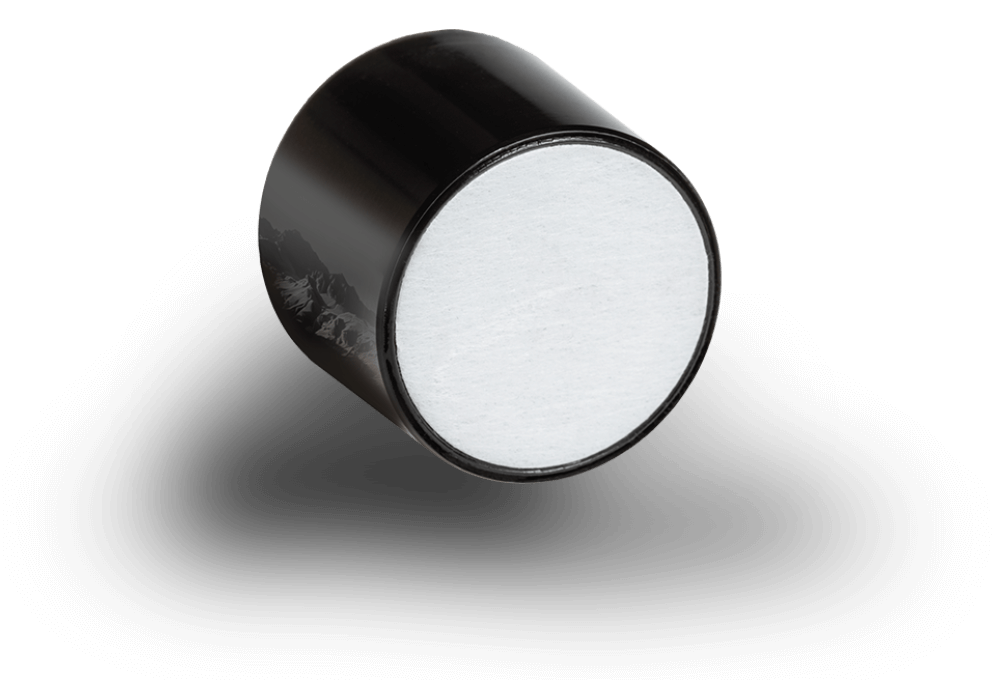
Figure 5: The sprintIR is capable of 50 readings per second with a T90 response time of just 0.2s. It uses a flow-through sampling method and can be used for both narrow (0-5%) and wide-range (0-100) CO2 concentration analysis.
T90 Response time
Response time, often expressed as T90, defines how quickly the sensor reaches 90% of a final reading after a step change in concentration. Diffusion-based NDIR CO2 sensors typically have response times between 20 and 60 seconds, whereas flow-through designs can achieve faster readings, with the sprintIR-R having a T90 response time of 0.2s at 1 dm3 per minute.
Operating environment
Operating temperature and humidity ranges influence sensor performance; typical indoor sensors function reliably between 0°C and 50°C and 0–95% relative humidity. Drift, caused by aging of optical components or contamination, can degrade accuracy over time. Many modern NDIR CO2 sensors incorporate automatic baseline correction (ABC) to minimize long-term drift and reduce calibration frequency.
Interface and Output Options
Digital communication interfaces such as UART, I2C, and Modbus are common in modern CO2 sensors, enabling easy integration into embedded systems and building management networks. Analogue outputs, including voltage and pulse-width modulated (PWM) signals, remain popular for simple monitoring and alarm triggering. For engineers designing systems requiring real-time alerts, sensor modules with programmable alarm outputs provide efficient CO2 threshold detection without additional processing overhead.
Power Consumption and Duty Cycle
Power consumption is critical for battery-powered and IoT applications. Continuous operation offers the best responsiveness but consumes the most energy. Duty-cycled operation, where the sensor wakes periodically to take readings before returning to low-power sleep, can extend battery life significantly. Ultra-low-power CO2 sensors, such as the cozIR-LP3 operates in the microamp range, enabling years of operation on a small lithium cell. Integration with energy harvesting sources like photovoltaic or thermoelectric generators can further extend sensor lifetime in remote deployments.
Environmental and Calibration Factors
As environmental factors such as temperature fluctuations, humidity, and airborne particulates can affect sensor accuracy, NDIR CO2 sensors need to include firmware-based temperature and humidity compensation. Optical filters and protective housings help mitigate interference from dust and other contaminants. Water vapour presents a particular challenge due to overlapping absorption bands and must be compensated for in sensor design.
Calibration strategies vary depending on application requirements. Factory calibration using certified reference gases ensures initial accuracy, while field calibration may be necessary in high-precision applications. Automatic baseline correction algorithms allow sensors to self-calibrate by assuming periodic exposure to ambient air with approximately 400 ppm CO2.
CO2 Sensors Applications
NDIR CO2 sensors are a critical technology for monitoring air quality, ensuring safety, and optimizing environmental conditions across a wide range of industries. In particular, their ability to deliver accurate, stable, and long-term measurements makes them essential in both controlled environments and real-world applications.
Medical and life sciences
In medical devices, they can be used to monitor respiratory gases in capnography and anaesthesia equipment, and control atmospheric conditions in neonatal and IVF embryo incubators. These applications demand sensors with high accuracy, high repeatability, long-term calibration stability, and compliance with medical device standards.
Smart buildings and indoor air quality
Building management systems use CO2 sensors to optimize ventilation in offices, homes, and schools, hospitals and public buildings based on real, rather than anticipated occupancy (aka demand-controlled ventilation/DCV), which simultaneously improves indoor air quality and reduces energy consumption. Wireless CO2 sensor modules and sensor networks enable distributed air quality monitoring in smart buildings and urban environments. Additionally, such sensors can also be used as part of fire prevention systems, both to deploy fire suppressants and to ensure a room/sector/building is subsequently safe to enter.
Here, the benefits include improved comfort and productivity, reduced energy consumption, lower operational costs and compliance with regional air-quality standards.
Industrial and agricultural safety and process control
Industrial applications include safety monitoring in breweries, wineries, and cold storage facilities, where elevated CO2 can pose health risks. The food industry also utilizes these sensors for modified atmosphere packaging (MAP) to verify seal integrity and enable significantly longer shelf lives. Greenhouses and vertical farming systems use CO2 sensors to maintain optimal conditions for plant growth, while farms with livestock are able to use them for enhanced welfare . Consumer products such as smart thermostats and air quality monitors incorporate CO2 sensing to provide environmental feedback.
Food Production and Shipping
In agriculture and food logistics, CO2 monitoring is critical for mitigating spoilage and maintaining quality throughout the supply chain.
For example, in long-term grain storage, ultra-low-power IoT NDIR sensors can be are deployed in silo towers and field-sealed silo bags. Because increases in CO2 concentration over time correlate with increased bacterial and fungal growth, the use of devices such as the CozIR-Blink can act as an early warning indicator for pest infestations, microbial activity, or physical bag damage.
Whereas, in specialized refrigerated shipping containers (reefers), controlled atmosphere technologies are used to maintain CO2 within an optimal 10- 20% range, which slows microbial growth and ripening to extend produce shelf life up to threefold. Here, implementan an automated tracking system based on CO2 sensors such as the ExplorIR-M can provide real-time monitoring and algorithmic adjustments to prevent food degradation.
Modified atmosphere packaging (MAP) is also another key method used by the food industry to minimize spoilage – for example in salad bags. Here, CO2 is added to maintain a concentration of 10-20% to slow bacterial growth and ripening and highly responsive, fast-T90 NDIR sensors such as the SprintIR-R can be integrated into the production line to monitor operations and verify seal integrity.
Additional applications
The technology’s use also extends to transport and mobility, laboratory research, and aerospace. For example, Gas Sensing NDIR sensors are used to monitor air quality on the International Space Station. The technology is also critical for the design of future space vehicles, where low-power, robust sensors are required to manage life-support systems in closed environments.
Selection considerations for Right CO2 Sensor
Gas Sensing’s NDIR CO2 sensors

Low Power

Wide Range

High Speed